-1.png)

 4min
4min
 Apr 28, 2026
When most people think of the Dominican Republic, they picture beaches—clear water, white sand, and resorts.
But that’s only part of the story.
The Dominican Republic is not just a place you visit.
It’s the kind of place that stays with you long after you’ve left.
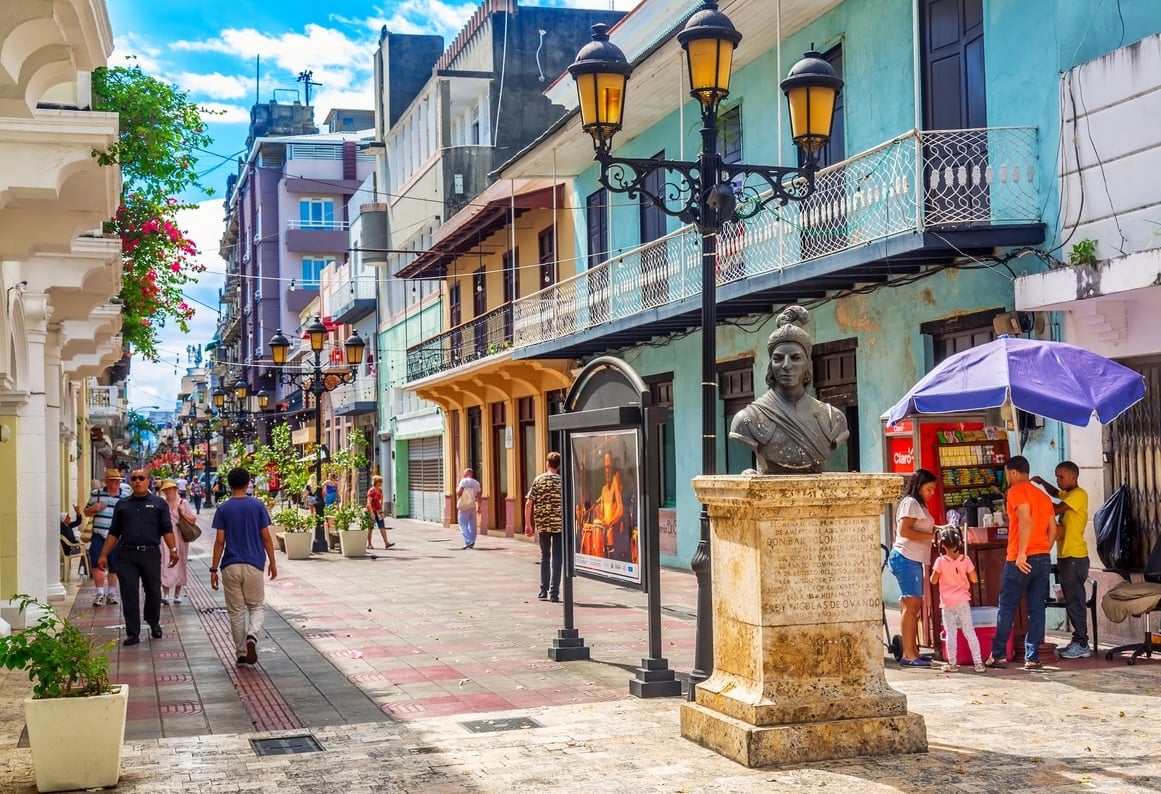 Everyday life in Santo Domingo, where color, culture, and community come together.
Located on the island of Hispaniola in the Caribbean, the Dominican Republic shares the island with Haiti. It has a population of over 11 million people. Its culture is shaped by a blend of Taíno (Indigenous), African, and Spanish influences, creating a vibrant identity that is both complex and deeply expressive.
And while many travelers come for the coastline, what stays with them is something else entirely—the rhythm, the flavor, and the people.
- Experience the culture of the Dominican Republic at our Spanish Summer STEAM Adventure in Tampa
👉 Seats are filling up! Register Now↗
Where Music is Part of Everyday Life
In the Dominican Republic, music isn’t reserved for special occasions; it’s part of daily life.
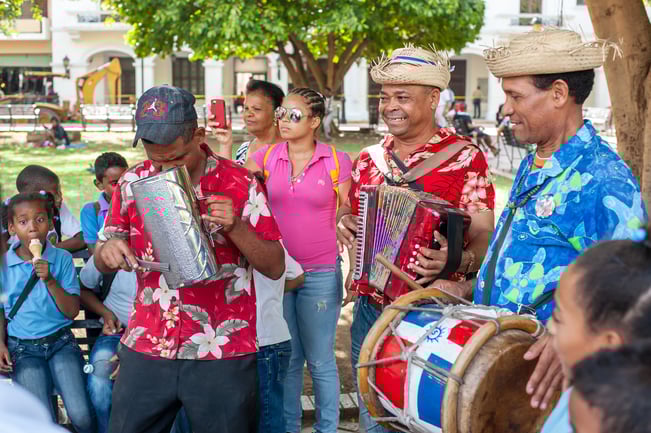 Street musicians in the Dominican Republic sharing music, rhythm and community.
Merengue, the national dance, is fast, joyful, and rooted in African and European traditions. Bachata, once considered the music of the countryside, has grown into a global genre that tells stories of love, heartbreak, and everyday life. African drum rhythms are still present in many forms of Dominican music today.
Music fills homes, street corners, shops, and family gatherings. It creates a rhythm that allows Dominicans to celebrate the essence of who they are as a people.
A Kaleidoscope of Color at Carnival
One of the most popular and vibrant cultural highlights of the Dominican Republic is its annual Carnival, celebrated every Sunday in February, leading up to Independence Day on February 27.
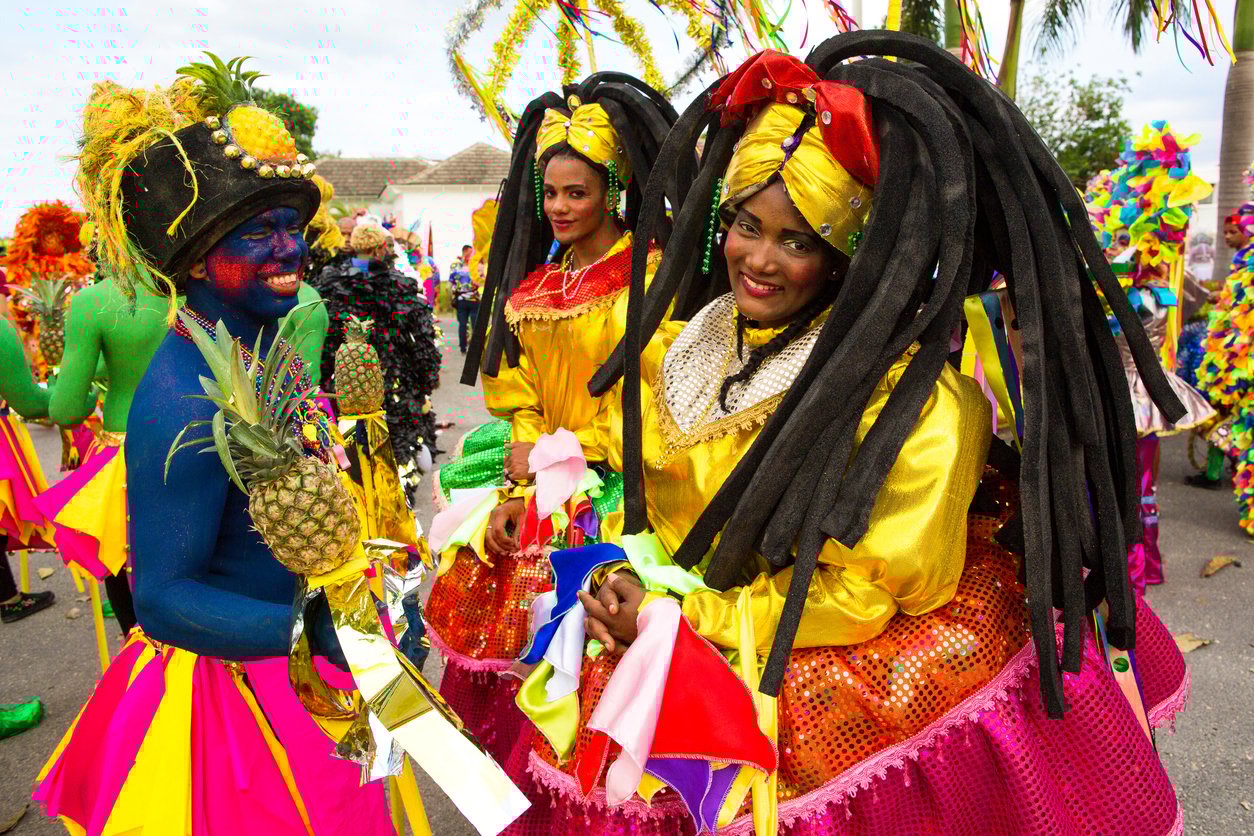 Carnival in the Dominican Republic—where history, culture, and celebration come alive.
Carnival is both a celebration of freedom and identity. It marks the country’s independence from Haiti in 1844 and reflects a mix of African, Spanish, and Indigenous traditions.
Colorful masks, especially the iconic vejigante masks, fill the streets, along with elaborate costumes, music, and dancing. Each region has its own style, making Carnival a powerful expression of local identity.
Food That Reflects History
Food in the Dominican Republic is deeply connected to its culture and history.
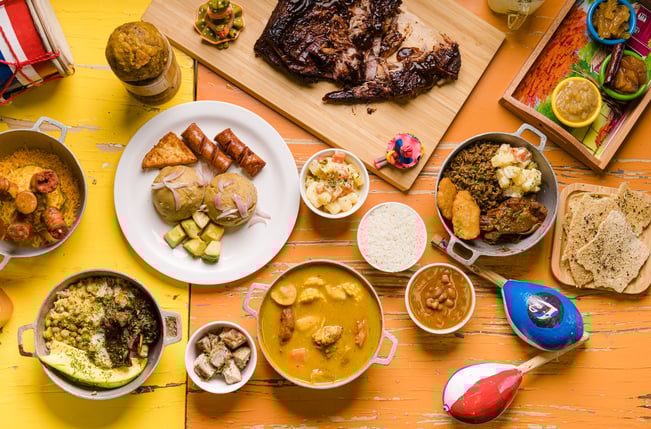 Dominican cuisine featuring traditional dishes like rice, beans, plantains, and stewed meats.
Staples like rice, beans, plantains, and stewed meats reflect a blend of Taino, African, and Spanish influences. One of the most loved dishes, mangú, made from mashed green plantains, traces back to indigenous traditions and is often served with eggs, cheese, and salami.
But meals are about more than what’s on the plate.
Lunch is often the largest meal of the day, and in many places, people take time to eat together, sometimes for over an hour. Many households are multi-generational, and food becomes a daily way for families to connect.
Language as a Living Experience
Spanish in the Dominican Republic is spoken quite fast-paced and can be full of personality.
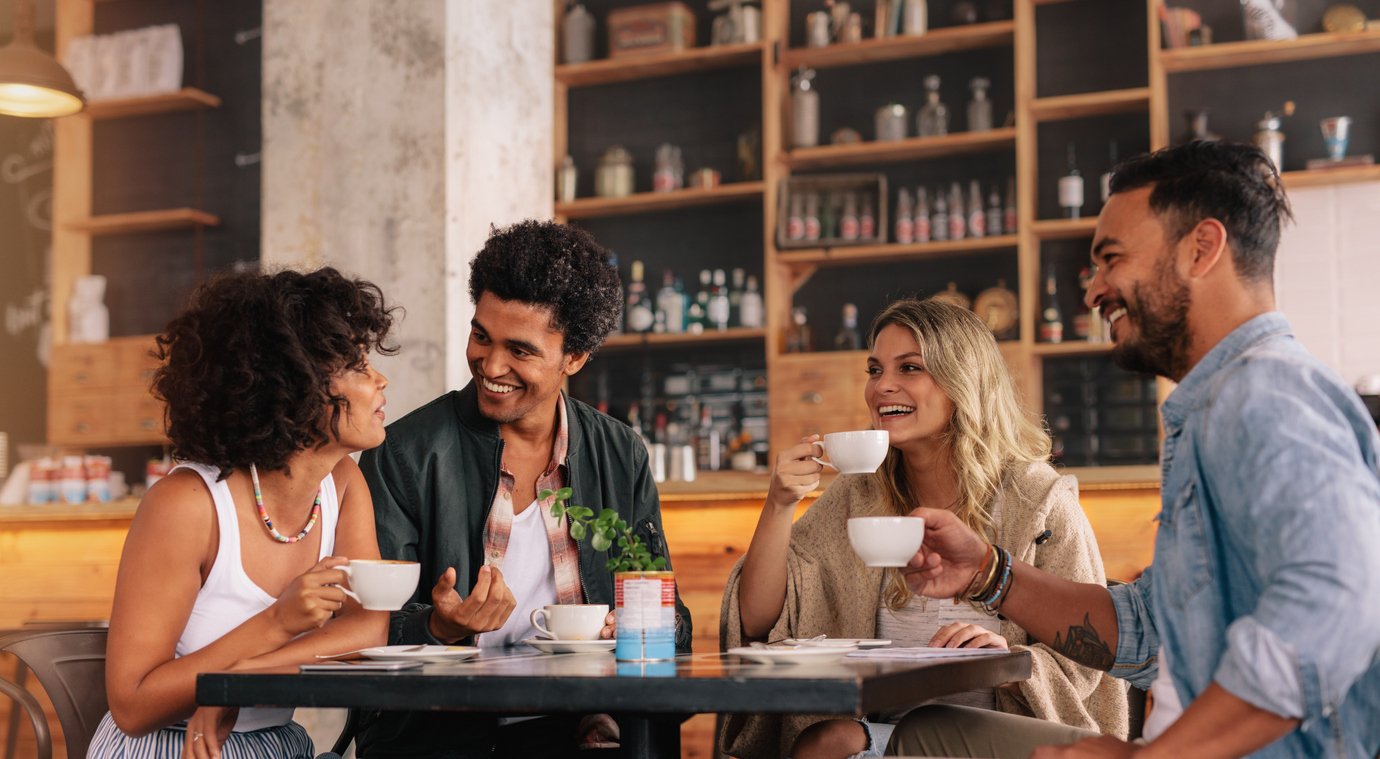
It reflects centuries of cultural blending, with influences from African languages, Spanish, and Taíno words that still appear in everyday speech.
Those words appear in lyrics, jokes, greetings, and storytelling.
Understanding Spanish will help you experience the Dominican Republic more deeply and open doors to conversations, relationships, and meanings that translation often misses.
👉 Best Spanish Summer STEAM Camp in Tampa! Reserve Your Spot Now↗
Santo Domingo: A Capital Full of History
The capital city, Santo Domingo, is the oldest continuously inhabited European settlement in the Americas.
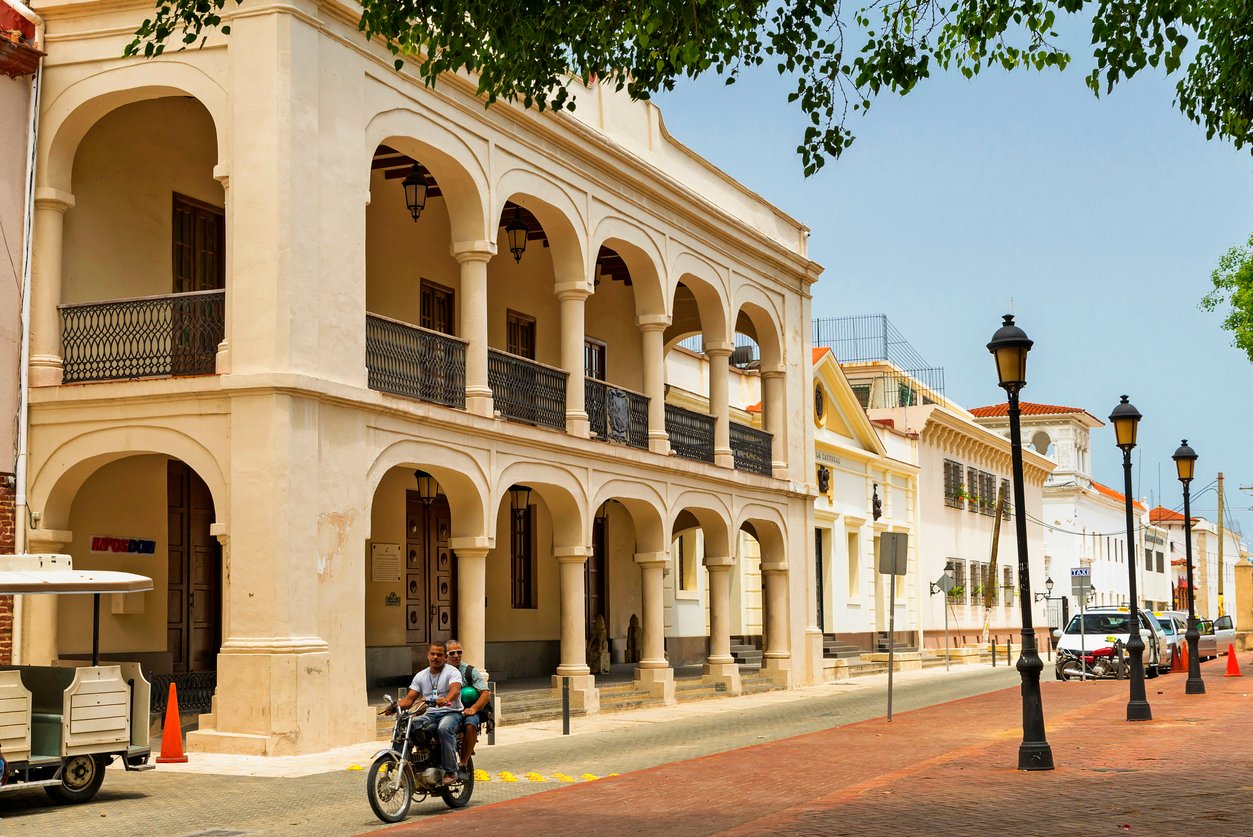 Zona Colonial in Santo Domingo, Dominican Republic, known for its historic architecture.
Its Zona Colonial, a UNESCO World Heritage Site, is filled with cobblestone streets, historic buildings, and landmarks like the Alcázar de Colón. Walking through this area feels like stepping into history, where some of the earliest stories of the Americas began.
At the same time, Santo Domingo is a modern, energetic city that blends history with contemporary life, art, and culture.
Places That Capture the Spirit of the Country
Beyond the capital, different regions of the Dominican Republic offer their own unique experiences:
%20(3).jpg?width=1200&height=630&name=Untitled%20(1200%20x%20630%20px)%20(3).jpg)
- Punta Cana is known for its beaches and resorts.
- The Samaná Peninsula has lush rainforests, waterfalls, and whale watching.
- Puerto Plata will give you mountain views, historic sites, and a cable car ride above the city.
- La Romana is home to Altos de Chavón, a Mediterranean-style village.
Each place reflects a different side of the country—natural beauty, history, and culture.
A Rich Cultural and Artistic Legacy
The Dominican Republic has produced influential writers and artists whose work reflects the country’s history and identity.
Julia Alvarez is one of the most well-known voices, exploring themes of identity, migration, and culture in her writing.
Other notable figures include poet Pedro Mir, whose work captured the spirit of the nation, and artist Cándido Bidó, known for his bold use of color inspired by Dominican life.
👉 Spanish Summer STEAM Adventure: Register Now – seats are filling up↗
A Culture Shaped by History and People
Dominican culture is the result of centuries of blending—Indigenous Taíno roots, African heritage brought through the transatlantic slave trade, and Spanish colonial influence.
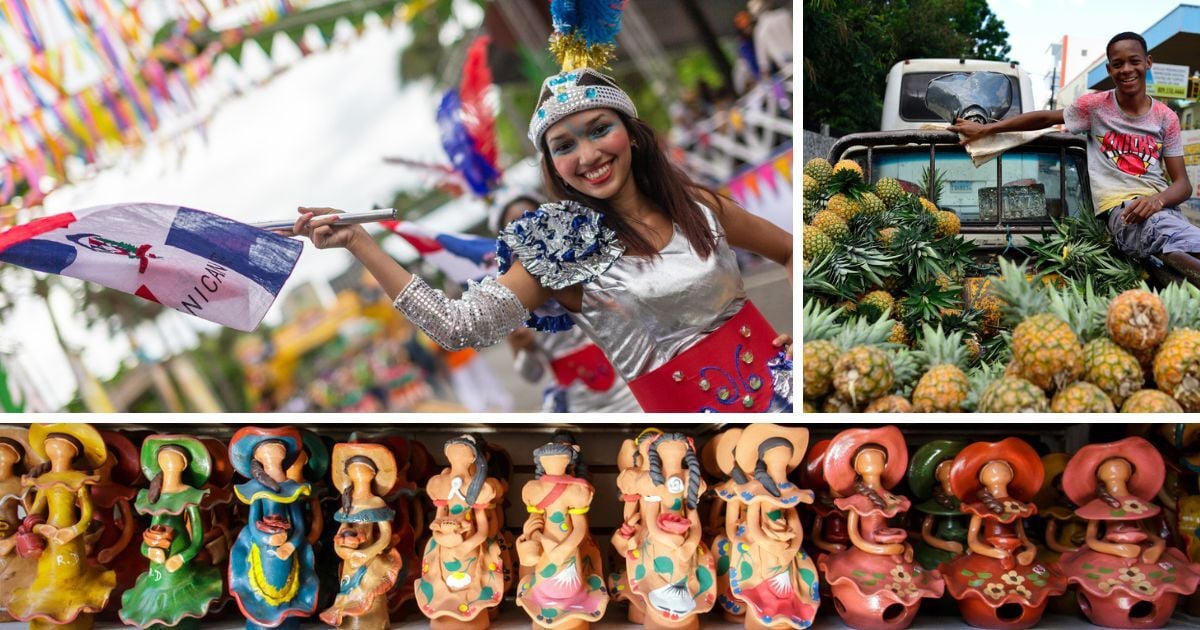
Today, the population reflects this diversity, with many Dominicans identifying as mixed heritage, alongside Afro-Dominican and European-descended communities.
This diversity is reflected in the country’s music, food, language, and traditions, creating a culture that is layered and dynamic.
A Cultural Experience That Stays With You
Not every family has the opportunity to travel, but meaningful cultural experiences don’t have to be far away.
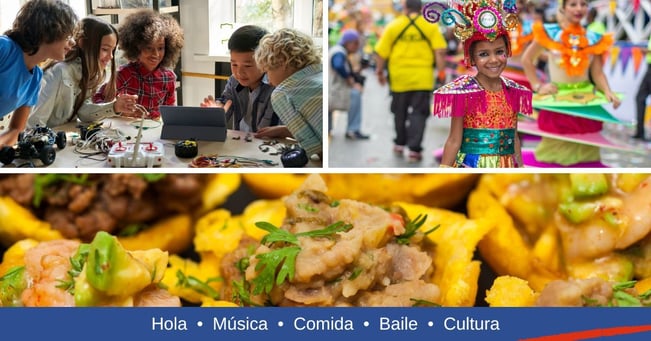
This summer, campers will explore elements of Dominican culture through music, food, creativity, and language, bringing these traditions to life in a way that feels engaging and real.
For many children, this immersive summer experience with culture, Spanish, and STEAM related activities could serve as a starting point to explore other cultures.
Final Thought
The Dominican Republic offers more than a destination. It offers a way of experiencing life through rhythm, language, food, and community.
And for those who take the time to understand its language and culture, the experience becomes even richer.
Ready to give your child:
-
Spanish
-
Culture
-
STEAM
-
Adventure
Best Spanish STEAM camp in TAMPA—income based discounts available.
👉 Reserve Your Spot Now↗
.png?width=900&name=Gauthier%20Academic%20Achievers%20Student%20(1000%20x%20333%20px).png)